Choosing the right Sheet Metal Sheets supplier in China takes more than comparing prices. Buyers need to assess material grades, thickness tolerances, surface finish, production capacity, and delivery reliability. A low quotation can look attractive, yet small inconsistencies in a 0.8-millimeter galvanized sheet may complicate stamping or assembly. Details matter.
The scale of China’s steel industry makes supplier selection especially important. The World Steel Association reported that China produced about 1,005 million tonnes of crude steel in 2024, out of approximately 1,883 million tonnes worldwide. These figures, published in its 2025 world steel production data, describe crude steel—not finished sheet output. Still, they show the depth of the country’s steelmaking base. They do not prove that any individual supplier offers consistent quality.
A useful comparison should examine mill certificates, inspection procedures, sample results, packaging, and export experience. Ask how suppliers control thickness variation and protect sheet edges during transport. Request documentation that matches the offered grade and batch. Then compare delivery terms and communication, not just the unit price. Look for evidence.
This guide explores suppliers through those practical checks rather than relying on unsupported rankings. No single shortlist suits every buyer; application requirements can change the answer. Even a detailed checklist has limits. Independent testing may still be sensible for critical orders.
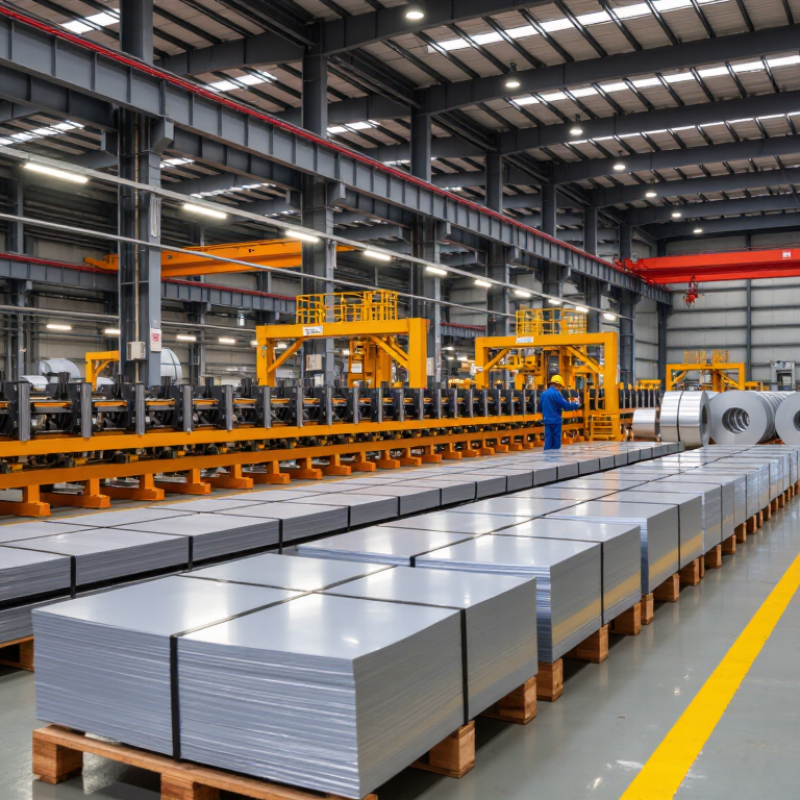
Sheet metal is metal rolled or formed into thin, flat stock, then cut, bent, or stamped into parts. It may arrive as a coil or as flat sheets, with thickness and surface finish chosen for the job. Not every sheet behaves alike. A thin panel can flex during handling, while a thicker one may need greater force to bend.
Common materials include carbon steel, stainless steel, aluminum, and copper. Carbon steel is widely used for enclosures and structural parts; stainless steel suits damp or hygienic settings, while aluminum offers lower weight. Copper is conductive and easy to shape, but usually costs more. The World Steel Association reported global crude steel production of about 1.88 billion metric tonnes in 2024. This figure covers all crude steel, not sheet products specifically, but it shows the scale of the wider supply chain. Material choice still depends on strength, corrosion exposure, forming needs, and finish.
Tips: Check the material grade, thickness tolerance, and coating on the supplier’s certificate. Ask for a sample and test the actual bend radius. A small mismatch matters. Also, reflect on the trade-off: the cheapest sheet may create more scrap or finishing work later.
Density helps compare material weight at the same volume. Values are approximate typical densities; actual values can vary by alloy and grade. Sheet metal is available in materials such as carbon steel, stainless steel, aluminum, copper, and brass.
How to Assess Sheet Metal Suppliers in China
Choosing a sheet metal supplier takes more than comparing quoted prices. Ask how the supplier controls thickness, flatness, and surface finish across a production run. Request material certificates and inspection records for the exact grade and batch being offered. A polished sample is useful, but it may not reflect everyday production. Check whether the supplier can explain its cutting, bending, welding, and coating tolerances in practical terms. Clear answers matter.
Tips: Send a detailed drawing with material grade, thickness, finish, and critical dimensions. Ask for a first-article sample and measure key features yourself. Confirm packaging, lead times, and how defects are recorded and handled. A supplier that shares dated inspection photos and measurement results is easier to assess than one relying on broad assurances.
Visit the facility when possible, or arrange a live video walk-through of relevant equipment and inspection areas. Look for calibrated measuring tools, organized material storage, and traceable work orders. These details do not guarantee flawless parts. Even a well-run factory can make mistakes, so agree on acceptance criteria before production begins. I would also test communication with one small order; response quality can reveal gaps that a sales presentation misses.
Use this practical evaluation framework to compare suppliers consistently. Suggested weights are starting points, not industry rankings; adjust them to match your material, application, and order requirements.
| Assessment Dimension | Suggested Weight | What to Assess | Evidence to Request or Verify | Strong Assessment Indicators |
|---|---|---|---|---|
| Material and grade traceability | 20% | Whether the offered alloy, grade, temper, and product form match the purchase specification. | Mill test certificate or material test report; heat or lot identification; purchase specification; sample labels. | Documents identify the material grade and lot, and the traceability information matches the delivered sheets. |
| Dimensions and tolerances | 15% | Control of thickness, width, length, flatness, and any agreed dimensional tolerances. | Product datasheet; inspection records; measurement method and equipment details; sample inspection report. | Measurements are recorded against the agreed specification, with clear acceptance criteria and handling of nonconforming material. |
| Quality management and inspection | 15% | Documented processes for incoming material checks, production control, final inspection, and corrective actions. | Quality management system certificate, if applicable; inspection plan; sample quality records; nonconformance procedure. | Certificates can be independently checked where applicable, and inspection records are specific to the product and order. |
| Surface condition and finish | 10% | Suitability of the surface finish and packaging for the intended use, including agreed limits for scratches, stains, or other defects. | Finish specification; representative samples; defect criteria; packaging photographs or work instructions. | Finish requirements and defect limits are agreed in writing before production and can be checked on receipt. |
| Production capacity and process control | 10% | Whether available equipment and production planning can meet the specified sheet format, quantity, and schedule. | Equipment and process list; production plan; capacity statement; sample order timeline. | Capacity claims are supported by relevant process information and a realistic, order-specific schedule. |
| Sampling and technical support | 10% | Ability to clarify specifications, provide representative samples, and respond to technical questions. | Written technical responses; sample identification; sample test or inspection results; specification review record. | Samples are clearly identified, and technical answers address the actual grade, dimensions, finish, and intended application. |
| Packaging and shipment readiness | 8% | Protection against moisture, corrosion, edge damage, and movement during storage and transport. | Packing specification; photographs of comparable packed goods; marking details; shipping documents as agreed. | Packaging is appropriate for the material and transport route, with clear product identification and agreed shipping marks. |
| Delivery reliability | 7% | Ability to meet confirmed production and dispatch dates and communicate schedule changes. | Order timeline; delivery records where available; written lead-time commitment; escalation contact. | Lead times are stated clearly, progress updates are available, and delays are communicated promptly. |
| Commercial clarity and after-sales handling | 5% | Clarity of quotation terms, specifications, payment conditions, claims process, and responsibilities for resolving defects. | Itemized quotation; purchase terms; written claims and replacement procedure; named service contact. | Price, specification, delivery terms, inspection requirements, and remedies for nonconforming goods are documented before ordering. |
| Total suggested weighting | 100% | Score each dimension against the same evidence standard for every supplier under consideration. | ||
Chinese sheet metal suppliers serve different needs, and their business models matter more than a polished catalogue. Large steel mills and affiliated processors suit buyers needing high volumes, consistent grades, and traceable production records.
China produced about 1,005 million tonnes of crude steel in 2024, roughly 53% of the global total, according to World Steel Association data.
That scale supports a broad supply base, but it does not guarantee every supplier offers suitable sheet thickness, coating, or delivery terms.
Service centers are a practical fit for smaller orders and mixed specifications. They commonly stock coils or sheets, then cut, slit, or level material to order. Ask for actual thickness tolerances and edge-condition details; a sample sheet can reveal burrs that a product listing cannot.
Fabricators and trading companies offer different strengths. Fabricators may provide laser cutting, bending, and finished components, while traders can consolidate products from multiple sources.
Convenient, sometimes. Yet extra handoffs can make batch consistency harder to verify.
For procurement, match the supplier type to the job: mill-linked processors for repeat volume, service centers for flexible sheet sizes, and fabricators for ready-to-assemble parts.
Request a recent inspection report, material certificate, and packaging photographs before shipment.
The World Steel Association’s figures describe crude steel, not finished sheet output, so they should not be treated as proof of any supplier’s capacity. That distinction is easy to miss.
A large production figure does not guarantee consistent sheet quality. The World Steel Association’s World Steel in Figures 2024 reports global crude steel production of 1,892.2 million tonnes in 2023. This shows the scale of the industry, not the capacity of any individual supplier. Ask for the specific mill or service-center address, monthly output, available thicknesses, and recent delivery records. Then compare those details with your order size and required lead time.
Check certificates carefully. Confirm that an ISO 9001 certificate is current, covers the relevant site, and can be verified with its issuing body. It supports quality-management practices; it does not prove every sheet meets your specification. Request mill test certificates linked to the material batch. For a trial order, measure thickness at several points and inspect flatness, surface marks, and coating consistency. A small discrepancy matters when sheets must fit a press brake or automated line.
Tips: Send the same written specification to each candidate. Include grade, dimensions, tolerance, finish, packaging, and test requirements. Ask for inspection photos and a sample report before shipment. If a supplier avoids sharing traceable records, pause. I would also check one detail twice: certificates can look convincing while covering a different facility.
When comparing sheet metal quotes from Chinese suppliers, check whether every price covers the same material grade, thickness, dimensions, tolerance, finish, and order quantity. Ask for a line-item breakdown: material, cutting, forming, finishing, packaging, and freight. A quote for 1.5 mm sheet is not comparable with one for 1.2 mm, even if both list the same alloy. Small differences matter.
Use credible market data as context, not as a substitute for supplier checks. The World Steel Association’s World Steel in Figures 2024 reports global crude steel production of about 1.89 billion tonnes in 2023. This scale shows why material availability and price can shift, but it does not prove that any individual quote is fair. Request a dated offer and clarify how long it remains valid. Also ask for material certificates, inspection records, sample parts, and documented measurement methods. A low quote can still be the wrong quote.
Compare delivery terms, lead time, payment schedule, and remedies for defects. Ask how the supplier protects sheets from scratches and moisture during packing; look for corner guards, separators, and clear labels on bundles. Check whether quoted tolerances match your drawing, especially around bends and holes. If a supplier answers vaguely, pause. I would not treat a polished catalogue as proof of stable production. Nor should one delayed reply decide everything. Compare evidence, then record what remains uncertain before placing a trial order.