
Leave Your Message
Sourcing Hot Rolled Alloy Spot Inventory requires more than finding available coils or plates. It demands careful verification, practical market knowledge, and disciplined supplier communication. Buyers must confirm alloy grade, thickness, width, surface condition, quantity, and delivery location before comparing prices. A low quote can hide unsuitable tolerances or incomplete documentation. That mistake becomes expensive when production schedules are tight.
Experienced purchasers usually begin with approved mills, established stockholders, and traceable distribution networks. They request mill test certificates, heat numbers, inspection records, and current inventory photographs. Each document should match the physical material. Labels, coil markings, and packing details can reveal inconsistencies early. They also check whether the material was produced to ASTM, EN, or another required specification. Regional certification requirements may differ, so technical teams should review them carefully.
Availability changes quickly.
A strong sourcing process also considers storage conditions, rust protection, cutting services, and transport handling. Alloy steel can lose value when exposed to moisture or careless loading. Buyers should ask how long the stock has been held and whether retesting is available. Price alone is not enough. Lead time, payment terms, claims procedures, and supplier responsiveness matter equally. In practice, no sourcing method is perfect. Inventory data may become outdated within hours, and some sellers provide incomplete details. A cautious buyer confirms critical information by phone and in writing. This guide explains how to evaluate suppliers, validate material quality, and reduce avoidable risks when purchasing Hot Rolled Alloy Spot Inventory.
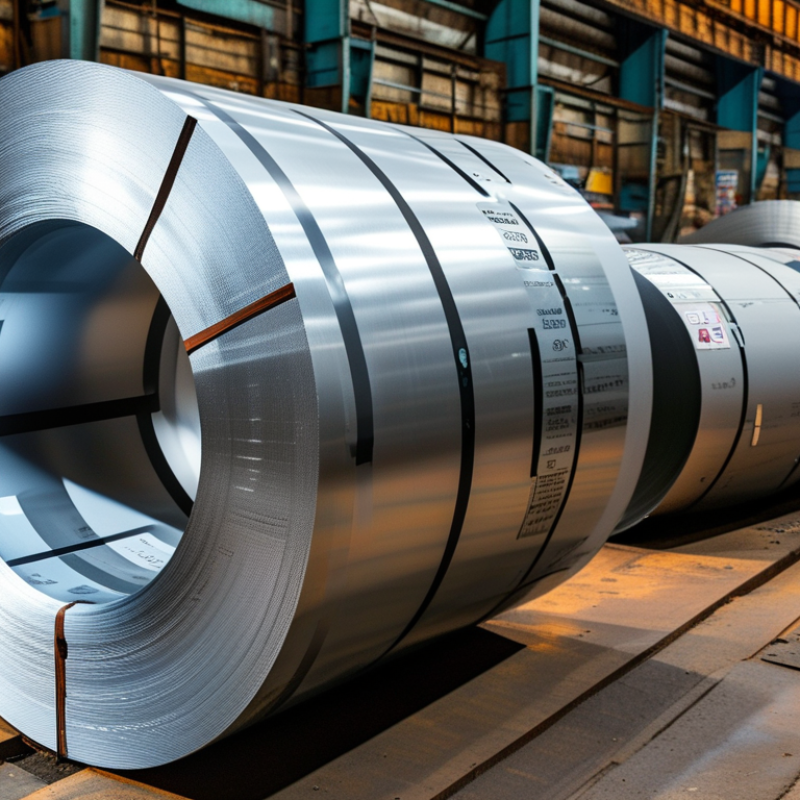
How to Source Hot Rolled Alloy Spot Inventory?
Define the material before requesting prices. State the alloy grade, chemistry range, thickness, width, length, quantity, and required delivery date. Include surface condition, dimensional tolerances, edge type, and heat-treatment status. A heat number and mill test certificate should accompany every lot. These details prevent a cheap coil from becoming unusable stock.
Market scale matters. The World Steel Association’s World Steel in Figures 2024 reports global crude steel production at about 1.9 billion tonnes in 2023. Yet availability is not the same as suitability. OECD Steel Market Developments reports continuing pressure from excess capacity and uneven demand. Buyers should therefore check whether inventory is physically available, recently produced, correctly labeled, and stored under dry conditions. Inspect rust, coil telescoping, flatness, packaging damage, and certificate consistency. I would also verify weight with photographs or an independent inspection. That step costs time. It can prevent a costly mistake.
Tips: Create a spot-inventory scorecard. Give separate scores for grade match, traceability, condition, quantity, location, and delivery reliability. Require clear photos of tags, coil surfaces, and storage areas. Ask for the production date and last inspection date. A low price is not proof of value. Some stock looks acceptable until slitting exposes edge cracks. Keep a small tolerance for uncertainty, but record every assumption before approval. Source references: World Steel Association, World Steel in Figures 2024; OECD, Steel Market Developments.
| Item | Requirement Dimension | Defined Requirement | Acceptable Spot Inventory | Inspection or Document Check | Example Inventory Data | Decision Rule | Status |
|---|---|---|---|---|---|---|---|
| 1 | Material grade | Hot rolled structural alloy steel plate meeting ASTM A572 Grade 50 or an explicitly approved equivalent. | Material grade, heat number, and manufacturing specification must be clearly identified. | Review the material test report, plate markings, and purchase specification. | ASTM A572 Grade 50; yield strength reported at 52 ksi; tensile strength reported at 70 ksi. | Accept only when the grade and test results meet the specified standard. | Acceptable |
| 2 | Product form | Hot rolled steel plate, not cold rolled sheet, galvanized sheet, or normalized-and-tempered plate unless approved. | Plate must be supplied in the required manufacturing condition and product form. | Check mill certificate, surface appearance, thickness range, and rolling condition. | Hot rolled plate; as-rolled condition; 12 mm nominal thickness. | Reject mismatched product forms even when the chemical composition is similar. | Acceptable |
| 3 | Thickness | Nominal thickness: 12 mm, with dimensional tolerance controlled to the applicable product standard. | Available thickness should be within the purchasing tolerance and suitable for fabrication allowance. | Measure several points using a calibrated ultrasonic thickness gauge or micrometer. | Measured range: 11.78–12.16 mm across sampled plates. | Accept when measurements comply with the specified thickness tolerance. | Acceptable |
| 4 | Width and length | Target plate size: 2,000 mm × 6,000 mm; nesting efficiency should support the cutting plan. | Stock dimensions may be larger than required but should not be undersized for the planned parts. | Verify plate dimensions, squareness, camber, and cutting allowance. | Available size: 2,000 mm × 6,000 mm; sufficient for the defined nesting layout. | Prioritize standard mill sizes that minimize cutting waste. | Acceptable |
| 5 | Chemical composition | Carbon, manganese, phosphorus, sulfur, silicon, and alloying elements must remain within the applicable grade limits. | Heat chemistry must be traceable and compatible with welding and forming requirements. | Compare reported heat analysis with the governing material specification. | Example heat analysis: C 0.18%, Mn 1.20%, P 0.015%, S 0.008%, Si 0.25%. | Do not rely on nominal grade alone; verify the actual heat analysis. | Acceptable |
| 6 | Mechanical properties | Minimum yield strength and tensile strength must meet the specified grade; elongation must satisfy the required thickness range. | Test values should provide a reasonable margin above minimum requirements. | Check heat-level tensile test results and test orientation where reported. | Yield strength: 360 MPa; tensile strength: 485 MPa; elongation: 22%. | Accept only when all required mechanical values are documented. | Acceptable |
| 7 | Surface condition | Surface must be free from harmful laminations, cracks, deep seams, excessive scale, and corrosion pitting. | Light mill scale and minor superficial discoloration may be acceptable if they do not affect fabrication. | Perform visual inspection under adequate lighting; use ultrasonic testing where critical. | Minor uniform mill scale; no visible cracks, laminations, or deep pitting. | Segregate plates with defects requiring repair or affecting finished thickness. | Acceptable |
| 8 | Traceability | Each plate or bundle must remain linked to its heat number, test report, and inventory record. | Permanent marking or controlled relabeling must be available before cutting. | Match physical markings with the material test report and receiving records. | Heat number marked on plate edge and recorded in the stock register. | Place untraceable material on hold until identity is confirmed. | Acceptable |
| 9 | Age of inventory | Inventory should be recent enough to avoid excessive corrosion, handling damage, or document loss. | Preferred stock age: 0–24 months; older stock requires additional inspection. | Review receiving date, storage conditions, corrosion condition, and document availability. | Stock received 8 months ago and stored indoors on raised supports. | Older stock may be accepted after condition and traceability review. | Acceptable |
| 10 | Weldability | Material chemistry and carbon equivalent must be compatible with the approved welding procedure. | Heat analysis should support the required preheat, interpass temperature, and consumable selection. | Calculate carbon equivalent when required and compare with the welding procedure specification. | Estimated carbon equivalent: 0.42; suitable for the approved procedure with controlled preheat. | Require engineering review when chemistry or thickness increases cracking risk. | Review Required |
| 11 | Ultrasonic quality | Internal discontinuity limits must comply with the project specification when through-thickness performance is required. | Ultrasonic test results should be available for critical welded or highly restrained components. | Review ultrasonic test report and testing class, if specified. | No ultrasonic report supplied for a plate intended for a restrained welded joint. | Hold material until additional testing or an engineering disposition is completed. | Review Required |
| 12 | Quantity and availability | Required quantity: 18 plates, with delivery needed within 10 calendar days. | Spot stock should be physically available, countable, and releasable without a new mill-production cycle. | Confirm physical count, reserved quantity, location, and release date. | 22 plates available; 18 unreserved; estimated release in 3 days. | Accept when available quantity covers demand plus approved contingency. | Acceptable |
| 13 | Commercial condition | Purchase should account for material price, cutting charges, freight, inspection, and potential scrap. | Compare landed cost with new-production alternatives and quantify usable yield. | Review quotation validity, payment terms, loading condition, and additional inspection costs. | Usable yield estimated at 91%; total landed cost is 8% below the new-production estimate. | Prefer spot inventory when savings remain positive after all handling costs. | Acceptable |
| 14 | Final disposition | Material must satisfy grade, dimensions, quality, traceability, quantity, and delivery requirements. | Only fully documented and physically verified stock should be released to production. | Complete receiving inspection and record acceptance, hold, or rejection reason. | 12 of 13 criteria verified; one ultrasonic report pending. | Release only after all critical criteria are closed. | On Hold |







 +86 18865111877