A Hot Rolled Steel Coil Manufacturer transforms steel slabs into durable coils through controlled heating, rolling, cooling, and coiling. The process may sound straightforward. It is not. Temperature, rolling pressure, surface scale, and cooling speed can change the final product significantly.
At a modern mill, red-hot slabs pass through roughing stands before entering the finishing line. Sensors monitor thickness within fractions of a millimeter. Water sprays adjust cooling across the strip. Operators then inspect the coil’s edges, surface, weight, and mechanical properties. These details matter when the coil becomes a bridge component, vehicle panel, storage tank, or construction beam.
Edwin Basson of worldsteel has said, “Steel is essential to modern life.” His observation explains why manufacturer selection requires more than a low quotation. A reliable Hot Rolled Steel Coil Manufacturer should provide clear steel grades, dimensional tolerances, test certificates, production records, and realistic delivery information. It should also explain whether the coil suits forming, welding, machining, or structural use.
Quality is never a single inspection.
It is repeated control.
However, no manufacturer is perfect. Minor variations can appear during production, transportation, or storage. That weakness deserves honest discussion, not polished promises. Buyers should ask about mill capacity, inspection methods, corrective actions, packaging, and technical support. This introduction examines what manufacturers actually do, how their processes affect coil performance, and which evidence separates dependable production from attractive marketing.
What Is a Hot Rolled Steel Coil Manufacturer?
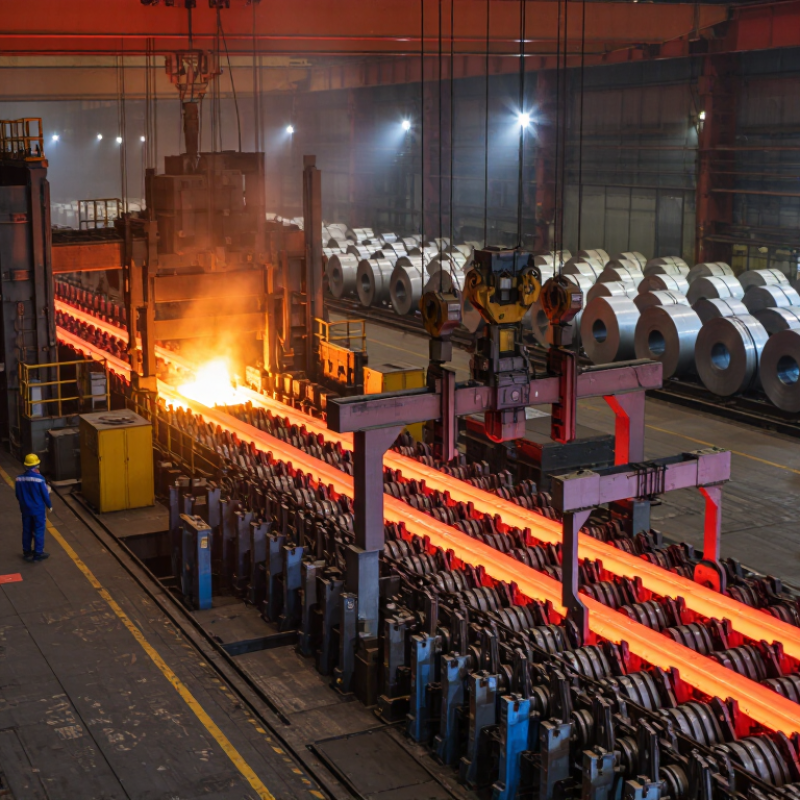
Hot rolled steel coil manufacturers produce wide steel strips by heating slabs and reducing them through rolling stands. The process usually occurs above the steel’s recrystallization temperature, often near 1,100–1,250°C. After rolling, the strip passes through controlled cooling equipment and forms a tight coil.
Their industrial role extends beyond basic production. Manufacturers manage chemical composition, rolling force, cooling speed, surface condition, and dimensional accuracy. These decisions influence strength, weldability, formability, and delivery performance. Coils may support construction beams, vehicle parts, pipelines, storage tanks, and fabricated machinery. Reliable producers also maintain test records for thickness, width, tensile strength, yield strength, and surface quality. However, production is never perfectly uniform. Edge cracking, scale, or minor thickness variation can occur, especially during demanding production runs.
Tips: Ask for a material test certificate and confirm the applicable steel grade. Check thickness tolerance, coil weight, inner diameter, surface condition, and packaging details. Request recent inspection data rather than relying only on catalog descriptions. A practical buyer should also review loading methods and storage conditions, because moisture can damage exposed steel surfaces. Measurements should be verified after delivery. Small differences may affect cutting, welding, or forming work.
A hot rolled steel coil manufacturer converts steel slabs into coiled strip by reheating, rolling, cooling, and coiling the material. The chart shows representative temperature points used across the industrial hot-rolling process. Actual settings vary by steel grade, thickness, and mill design.
Representative industry temperature values: slabs are commonly reheated above 1,100°C, finishing rolling is generally completed above the steel’s recrystallization range, and coiling typically occurs at approximately 550–700°C.
A hot rolled steel coil manufacturer converts iron-bearing raw materials into continuously rolled steel strip. The World Steel Association reported approximately 1.89 billion tonnes of crude steel production in 2023. That scale makes process control essential. Scrap, iron ore, and alloying materials are checked before charging. Chemistry matters.
Steel is cast into slabs, often several meters long. Reheating furnaces then raise slab temperatures to roughly 1,200°C. The target must be high enough for plastic deformation, but excessive heat increases oxidation and energy use. Furnace operators monitor temperature zones, fuel flow, and scale formation. Heat matters.
Roughing mills reduce slab thickness through repeated passes. Finishing stands continue rolling above 1,000°C, producing a thinner strip with controlled dimensions. Water sprays rapidly cool the strip before coiling. Line speed, cooling intensity, and coiling temperature influence strength, surface quality, and grain structure. Small losses multiply.
The process is not perfectly uniform. Edge cooling can differ from center cooling, and furnace scale may leave defects. Experienced manufacturers use thermocouples, automated gauges, and laboratory testing to identify these variations. The International Energy Agency estimates that iron and steel production creates about 7–9% of global energy-related emissions, so waste heat recovery and efficient furnace design deserve serious attention. A reliable producer should publish inspection records, chemical results, and dimensional tolerances, while admitting where process improvements remain necessary.
What Is a Hot Rolled Steel Coil Manufacturer?
A hot rolled steel coil manufacturer transforms cast steel slabs into coiled strip for construction, machinery, and fabrication. The process begins with reheating. Slabs reach a controlled temperature before entering the roughing mill. Heat matters.
High-pressure rollers reduce the slab’s thickness through repeated passes. Water sprays remove surface scale between reductions. Operators monitor rolling force, slab temperature, and width during each pass. Small changes can affect the final surface and mechanical properties. The roughing mill creates a more manageable transfer bar. It is still thick, hot, and unstable in appearance.
The transfer bar then moves through finishing stands at higher speed. Each stand applies a precise reduction to reach the target gauge. Temperature control becomes increasingly important near the final stand. Excessive cooling may reduce workability, while insufficient control can affect grain structure. After finishing, laminar cooling lowers the strip temperature evenly. The strip usually reaches the coiler at approximately 500–700°C, depending on grade and specification. The coiler forms a tight, durable roll without damaging the edges. Sensors track tension, temperature, and coil shape in real time. Experienced teams still inspect samples because instruments cannot reveal every issue. The process is not perfectly uniform. That limitation requires honest testing, careful records, and practical judgment.
| Production Stage | Primary Objective | Typical Operating Conditions | Main Equipment | Key Process Controls | Typical Output or Result |
|---|---|---|---|---|---|
| Raw Material Preparation | Prepare a chemically consistent steel charge for melting and casting. | Scrap and iron-bearing materials are proportioned according to the target steel grade. No rolling temperature is applied at this stage. | Raw-material handling systems, weighing equipment, scrap inspection areas, and charging systems. | Material sorting, charge weight, alloy composition, residual-element control, and traceability. | A documented charge mix suitable for producing carbon, structural, or low-alloy hot rolled steel. |
| Steelmaking and Refining | Convert the charge into liquid steel with the required chemical composition and cleanliness. | Liquid steel is typically produced above the steel melting range, commonly around 1,600°C, depending on grade and process route. | Electric arc furnace or basic oxygen furnace, ladle furnace, and secondary-metallurgy equipment. | Carbon, manganese, silicon, sulfur, phosphorus, dissolved gases, inclusion control, and molten-steel temperature. | Refined liquid steel ready for continuous casting. |
| Continuous Casting | Solidify liquid steel into a semi-finished slab with controlled dimensions. | Steel enters the caster at approximately 1,550–1,600°C; water sprays control shell growth and strand temperature. | Steel ladle, tundish, mold, secondary-cooling zone, withdrawal and straightening units, and torch or mechanical cutting equipment. | Cast speed, mold level, cooling-water flow, slab thickness, surface quality, and breakout prevention. | A cast slab, commonly about 150–250 mm thick, cut to a length suitable for reheating. |
| Slab Reheating | Heat the slab uniformly so it can be plastically deformed during roughing and finishing. | Typically about 1,150–1,250°C, depending on steel grade, slab thickness, and rolling schedule. | Walking-beam or pusher-type reheating furnace, burners, scale-removal system, and furnace-control instrumentation. | Furnace temperature profile, soaking time, atmosphere, fuel efficiency, and prevention of excessive oxidation or decarburization. | A uniformly heated slab with a temperature suitable for controlled hot rolling. |
| Descaling | Remove high-temperature iron oxide scale from the slab surface before rolling. | Usually performed while the slab remains above approximately 1,050°C. | High-pressure water headers, pumps, filters, and scale-pit handling equipment. | Water pressure, nozzle condition, spray coverage, slab speed, and scale-removal effectiveness. | A cleaner slab surface that reduces rolled-in scale and improves surface quality. |
| Roughing Mill | Reduce slab thickness substantially and transfer the slab toward the finishing train. | Entry commonly around 1,050–1,150°C; the slab remains above the recrystallization range during major reductions. | Reversing roughing stand or tandem roughing stands, vertical edgers, work rolls, backup rolls, and descaling units. | Pass schedule, roll force, roll gap, width control, slab temperature, speed, and flatness. | A transfer bar, often reduced to approximately 25–50 mm thick, with controlled width and profile. |
| Transfer Bar Cooling and Finishing Entry | Adjust the transfer-bar temperature before precise gauge reduction in the finishing mill. | Temperature is controlled to the finishing schedule, commonly around 900–1,050°C before the finishing stands. | Interstand transfer table, water sprays, transfer-bar descaler, pyrometers, and crop-shear equipment. | Transfer-bar temperature, cooling uniformity, head and tail cropping, tracking, and timing between mill stands. | A dimensionally stable transfer bar prepared for final thickness and shape reduction. |
| Finishing Mill | Achieve the specified final thickness, width, surface profile, and mechanical-property potential. | Finishing entry is often about 900–1,050°C; finishing temperature is commonly controlled around 800–900°C, grade dependent. | Multi-stand tandem finishing mill, hydraulic roll-gap controls, work-roll bending systems, looper tables, and cooling headers. | Automatic gauge control, thickness, width, crown, flatness, interstand tension, roll force, speed, and finishing temperature. | Hot rolled strip with a typical thickness range of about 1.2–25 mm, depending on the mill and product specification. |
| Run-Out Table Cooling | Control the strip cooling rate to develop the required microstructure and mechanical properties. | Strip is cooled from the finishing temperature toward the selected coiling temperature, commonly within 500–700°C. | Run-out table, laminar cooling headers, side sprays, pyrometers, and cooling-water control systems. | Cooling rate, water-flow distribution, strip speed, strip temperature, phase-transformation behavior, and cooling uniformity. | Strip with controlled temperature and microstructure, suitable for coiling at the specified temperature. |
| Coiling | Form the finished hot rolled strip into a compact coil for handling, storage, and shipment. | Typical coiling temperature: 500–700°C, selected according to steel grade, thickness, and required properties. | Downcoiler, wrapper rolls, pinch rolls, mandrel, coil-transfer equipment, and coil weighing system. | Coiling temperature, coil tension, mandrel expansion, coil shape, tail-end control, and winding tightness. | A hot rolled steel coil with controlled outer diameter, inner diameter, width, weight, and winding quality. |
| Cooling, Inspection, and Finishing | Stabilize the coil and verify compliance with dimensional, surface, and mechanical requirements. | Coils cool gradually to ambient conditions; additional processing may occur after cooling. | Coil cooling areas, inspection lines, skin-pass mill, leveler, slitter, crop shear, and surface-inspection equipment. | Thickness, width, camber, flatness, surface defects, coil identity, mechanical tests, and visual inspection. | Inspected hot rolled coil supplied as hot rolled, pickled and oiled, slit, cut-to-length, or further processed material. |
| Quality Documentation and Dispatch | Release conforming coils with complete production and test information. | Coils are handled at ambient temperature using lifting and transport equipment rated for the coil mass. | Coil storage racks, strapping equipment, labeling systems, weighing scales, and logistics equipment. | Heat number, coil number, dimensional records, chemical analysis, mechanical-test results, packaging, and shipping documents. | Traceable hot rolled steel coils ready for downstream fabrication, forming, welding, or surface treatment. |
What Is a Hot Rolled Steel Coil Manufacturer?
A hot rolled steel coil manufacturer converts heated steel slabs into continuous coils. The process uses high-temperature rolling, descaling, cooling, and controlled coiling. Typical coil thicknesses range from 1.2 to 25.4 mm, while widths can reach 2,000 mm. These dimensions support structural parts, transport equipment, tanks, and fabricated machinery.
The range sounds simple, but production control is demanding. A 1.2 mm coil needs different tension control from a 25.4 mm plate-like coil. Operators monitor temperature, crown, flatness, edge quality, and surface scale. The World Steel Association reported approximately 1.89 billion tonnes of crude steel production in 2023. That figure shows the sector’s scale, but it does not guarantee identical coil quality. ASTM A1011 and EN 10051 requirements also show why thickness tolerances, width tolerances, and surface conditions must be specified clearly. A broad capability statement can still mislead.
Tips: Ask for the exact thickness tolerance, width tolerance, coil weight, inner diameter, steel grade, and surface condition. Request a mill test certificate and sample inspection records. Check whether 2,000 mm refers to regular production or a maximum trial width. That detail matters. I would also confirm the rolling schedule and edge condition before ordering. Small omissions can create costly cutting waste. Data from the World Steel Association and published dimensional standards should guide supplier comparisons, not replace physical inspection.
A hot rolled steel coil manufacturer melts, casts, reheats, and rolls steel above its recrystallization temperature. The process leaves a rougher surface and wider dimensional tolerance than cold rolling. Experienced buyers examine more than attractive samples. They review process controls, inspection records, and traceability from furnace heat to shipped coil.
Common references include ASTM, EN, and JIS specifications. A reliable mill provides chemical analysis, mechanical test results, dimensional inspection, and surface condition records. The mill certificate should identify the heat number, grade, coil weight, thickness, width, and test method. Check the details. A certificate alone cannot prove consistent production quality. Independent testing may reveal differences between sampled coils and actual deliveries.
Typical hot rolled grades may serve construction, forming, structural, or general fabrication needs. Tensile strength, yield strength, elongation, and carbon content must fit the customer’s design. Manufacturing capacity requires measurable figures, not vague claims. Useful metrics include annual output in tonnes, furnace capacity, rolling width range, thickness range, minimum order size, and average monthly utilization.
Delivery performance matters too. Ask for recent lead-time data and rejected-coil rates. Capacity can look impressive on paper, yet maintenance shutdowns may reduce availability. That part is often overlooked. A careful assessment should compare certified capability with actual shipment records, inspection frequency, and corrective-action history.